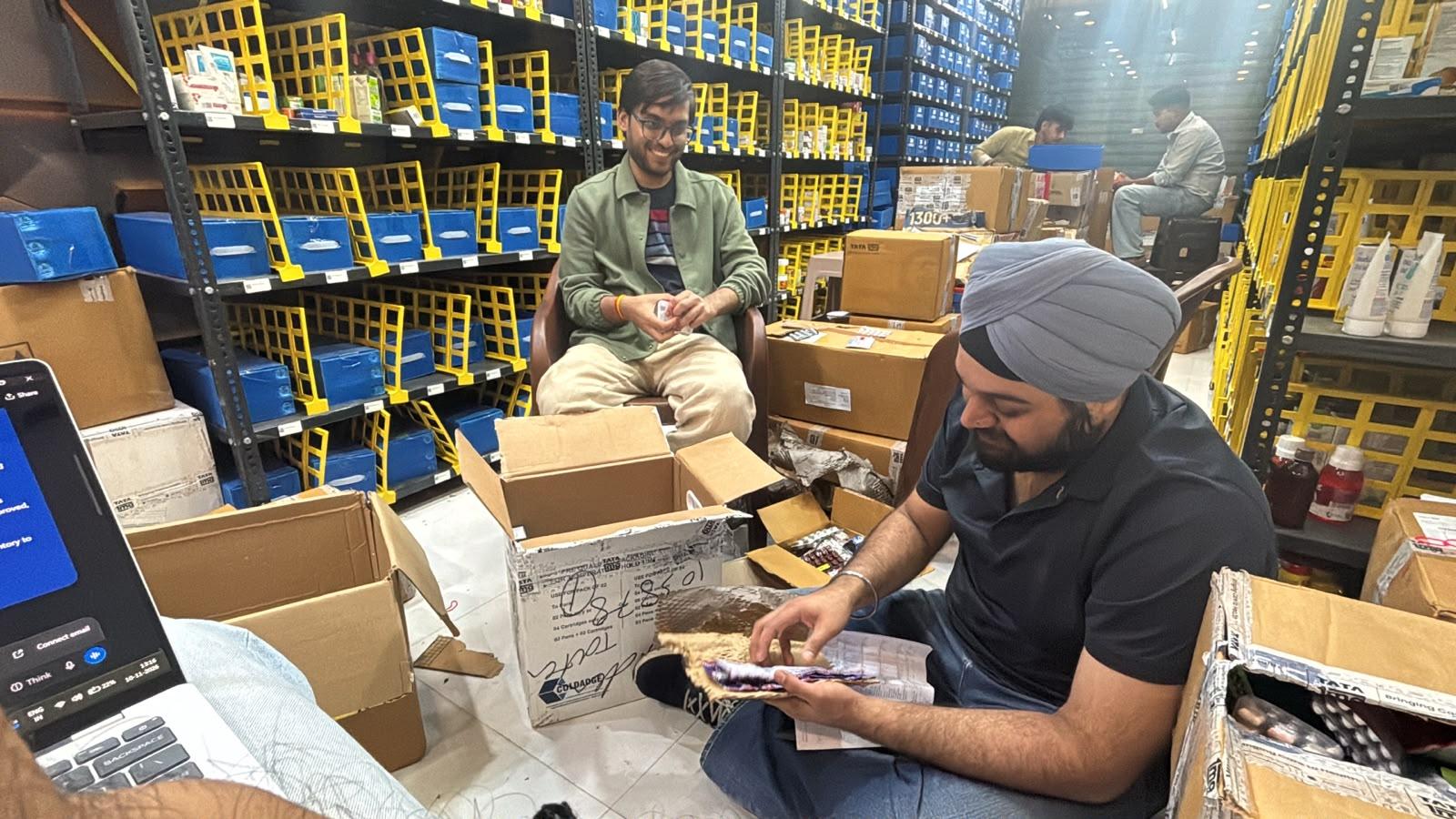
Apparel and Footwear in Quick Commerce: Fulfilling a Category That Comes Back
Every dark store in India was built around one direction of travel. Stock arrives by the crate, leaves one order at a time, and the operation is judged on how quickly it leaves. Apparel and footwear do not fit that design. They are the only mainstream quick commerce categories where the customer expects to send something back as part of deciding what to keep.
That changes what fulfilment means. A fashion brand offering 60-minute or same-day delivery on its own website is not running a faster version of standard ecommerce. It is running a round trip, and the economics of that round trip are set by three decisions most brands make by default: where the keep-or-return decision happens, how many sizes deep the nearest node is, and how quickly a returned unit becomes sellable again.
This piece works through those decisions for D2C founders and operations leads weighing rapid delivery for clothing and shoes.
The short answer: Apparel quick commerce fulfilment is the design of a round trip, not a one-way delivery. Faster delivery cuts the returns that come from hedged, multi-platform ordering, but it does not cut fit-driven returns. Those have to be converted into kept sales through doorstep decisions, single-visit exchanges and enough size depth at the node closest to the customer.
Why does fashion break the standard quick commerce fulfilment model?
Standard quick commerce fulfilment assumes a product leaves the dark store once and stays sold. Fashion assumes a share of what leaves will come back, so the network has to work in both directions.
Three structural differences drive this.
- Sizes multiply SKUs. One shirt in one color across six sizes is six SKUs, each needing stock at the node. The same shelf holds far fewer styles than it would in beauty or packaged food.
- Fit cannot be verified before purchase. A repeat buyer knows their moisturizer before it arrives. Nobody knows a new trouser fits until it is on.
- The decision is physical. Keep or return happens with the garment on the body, which means either someone waits at the door or a second trip happens later.
Dark stores were designed for outbound speed, which is why inbound flows break first when nobody plans for them. We covered that failure in detail in why dark stores reject returns customers were already promised. Fashion is the category where that inbound flow is not an exception but part of every week's volume.
Which apparel returns does faster delivery actually prevent?
Faster delivery prevents the returns that come from hedging, where a shopper orders for the same need from several places and keeps whichever arrives first. It does not prevent returns caused by fit, and treating the two as one problem leads brands to over-credit speed.
The clearest public evidence comes from a listed Indian retailer's quarterly disclosure. Its rapid fashion delivery service reported a 16% higher average selling price, 17% better conversion and returns 500 basis points lower than its platform average in the quarter to September 2025. Explaining why returns fell on a service that promises delivery within four hours, the company's CFO said many fashion returns happen because customers order from two or three platforms and send back whatever arrives later. When the item arrives soon after the need, the hedge disappears.
Two details matter for D2C operators. First, the reduction came from a four-hour promise, not a ten-minute one. The threshold that removes hedging is arriving before the alternative parcel does, which makes it a reliability problem more than a speed race, the same point behind asking whether customers want 10-minute delivery or a promise that holds.
Second, this is a comparison against a platform average, not a controlled test. Customers who choose fast delivery may already be more decisive buyers. Before you credit speed with lower returns on your own site, run the comparison properly.
The return-driver map
| Return driver | Does faster delivery reduce it? | What actually moves it | What the node needs |
| Hedged or multi-platform ordering | Yes, when the parcel beats the alternative | A delivery promise that holds | Stock of the ordered SKU at the nearest node |
| Fit and size | No | Doorstep decision, single-visit exchange, better size guidance | Adjacent sizes of the same style at the same node |
| Wrong variant shipped | No | Scan-verified picking against the order ID | Size and colour barcode discipline at pick and pack |
| Condition (damage, removed tags, crushed shoebox) | No, and rushed packing can worsen it | Packing SOP and condition criteria agreed upfront | Packaging that survives a fast, short run |
Read the table as a division of labor. Speed handles one row. Fulfilment design handles the other three.
Should the return decision happen at the door or after the rider leaves?
Doorstep trial turns a fit return into an immediate decision and removes the second trip, but it spends rider time on every trial order. It pays only where the avoided reverse pickup and the rescued sale are worth more than the minutes spent waiting.
Try and buy is now a common practice among Indian fashion quick commerce players: the rider waits while the customer tries the order on and takes back whatever does not work. The cost is real. As The Economic Times reported, riders waiting at the door raise the cost per delivery and cut the number of deliveries each one can complete.
The practice is also not new. The same report noted that a major Indian fashion e-tailer introduced try and buy in 2016 and that it did not scale because of supply chain limitations, with one executive pointing out that deliveries then ran through national couriers rather than hyperlocal fleets. Doorstep trial stalled the first time on infrastructure, not demand.
Brands now run four broad versions of the doorstep decision:
- Wait-and-try. The rider waits a fixed window while the customer tries everything on.
- Two-size delivery. The adjacent size travels with the order and the unused one goes straight back. At least one D2C fashion brand has announced plans for this alongside try and buy.
- Single-visit exchange. A return is collected on the same visit that delivers the replacement size.
- Scheduled reverse pickup. The conventional route, with a separate trip on a later slot.
A simple test tells you which to offer, and on which orders. Doorstep trial makes sense for an order type when:
Wait minutes × rider cost per minute < Fit-return probability × (Reverse pickup cost + Lost-sale probability × Contribution margin)
Every variable on the right-hand side can be measured from a brand's own return data. A first order for a new fit block scores very differently from a repeat order in a known size, which is why the strongest operators offer trial selectively rather than on every order.
One condition sits under every version: the person at the door has to apply the same standard every time. What counts as tried on versus worn, whether tags must be intact, and what to do with a damaged box cannot be left to individual judgement without producing different outcomes in different cities.
How much size depth does a fashion dark store need?
Enough to complete an exchange from the same node within the same delivery promise. In practice, that usually means fewer styles in fuller size runs rather than a wide catalogue with broken sizes.
A broken size run quietly converts exchanges into refunds. If the customer's M is at the node but the L they now need sits in a central warehouse days away, many customers take the refund instead. The sale was saved at the door and lost on the shelf.
That argues for a deliberate split: proven core styles in complete runs at the node, and the long tail on standard delivery from central stock. It takes the logic of choosing the right SKUs for quick commerce one level down, from which products to place to how many sizes of each.
Returns also change the inventory picture. A returned M that passes its condition check at 4 pm can be the next customer's M at 6 pm, but only if it is graded and reshelved at that node rather than sent back to a central warehouse. Grading speed decides that, and our reverse logistics guide breaks down the grading and disposition decisions. Full size runs across many nodes also lock up more stock, so model the working capital effect of distributed inventory before rolling depth out to every location.
Footwear: the box is part of the product
Footwear shares apparel's fit problem and adds three of its own.
- The shoebox decides resale. A pair returned in a crushed or marked box often cannot be sold as new, so packing has to protect the box as well as the shoes.
- Shelf space runs out before capital does. Shoeboxes take far more shelf volume per unit than folded garments, which limits how deep a node can stock.
- Size runs are longer. Half sizes and width fittings stretch a single style across more SKUs than most apparel.
For premium and resale sneakers, authentication before dispatch adds another step that has to fit inside the delivery promise, with the same custody concerns we covered for high-value D2C orders.
What should a fashion brand measure before scaling rapid delivery?
Measure the round trip, not just the delivery. Five category-specific numbers show whether rapid fashion fulfilment is working or simply moving returns faster.
| Metric | What it tells you |
| Kept-unit rate per dispatch | Units kept divided by units sent. The clearest single measure of whether a round trip earned money. |
| Exchange conversion rate | Share of fit returns that become exchanges rather than refunds. It falls when size runs break. |
| Size-break rate at node | Share of orders where a listed style is missing the requested size at the nearest node. |
| Door-dwell minutes per trial order | The real cost of doorstep trial, measured rather than assumed. |
| Hours from return pickup to sellable at node | How quickly returned stock becomes inventory again. |
These sit alongside the general quick commerce fulfilment KPIs every operations lead should track, not in place of them. Validate any improvement on matched cohorts before scaling on it. A lower return rate in month one may reflect who chose fast delivery rather than what fast delivery did.
Where Zippee fits
Zippee runs Quick Commerce-as-a-Service for brands selling on their own websites: 140+ dark stores across 21+ cities, pick and pack to each brand's SLAs and SOPs, and delivery partners who are full-time employees rather than gig workers. Fashion brands including Myntra and Libas are among the 100+ brands on the network.
For a category that comes back, the forward leg decides more than it appears to. Two of the four return drivers in the map above, wrong variants and condition, are settled at pick and pack. Node proximity decides whether the next size can travel within the same promise. And riders who are employed and trained on one brand's standards apply the same packaging and handover SOP in Bengaluru as in Delhi NCR, from dark stores dedicated to the brand's own channel rather than a platform's shelf.
The takeaway
Fashion will keep coming back. The brands that win rapid delivery in apparel and footwear will design for the return leg from the start: keep the decision close to the door, keep the next size close to the customer, and keep returned stock in the node it left from. Speed earns the order. Round-trip design keeps it.
If you're ready to turn your fulfilment into a competitive advantage, join our waitlist.


