Do Your Customers Want 10 Minute Delivery, or Do They Just Want You to Keep the Promise? (2026)
No customer has ever cancelled a subscription because the box took forty minutes instead of ten. They cancel because you said Tuesday and it landed on Thursday.
Speed is the metric brands obsess over. Reliability is the one customers actually punish you for. Those are not the same thing, and treating them as the same is quietly expensive.
The 10 minute number is a category signal, not a universal demand
Ten minute delivery solved one specific job: the forgotten essential. Milk at 11pm, a phone charger, a packet of chips. That mission rewards raw speed because the customer has already decided and just wants it in hand. Low consideration, low ticket, high frequency.
Most D2C purchases are a different mission. An 1,800 rupee supplement stack, a pet food subscription, a skincare regimen. The customer researched it. They care what arrives, how it is packed, and whether it turns up when you said it would. Shaving twenty minutes off delivery does not change that decision. Breaking the promised window does.
The industry took a number that made sense for impulse grocery and treated it as what every customer wants. For considered categories, it is the wrong benchmark to chase.
What actually moves repeat purchase
Speed and reliability get discussed as if they are the same lever. They are not. Here is how they behave differently across the things a brand actually cares about.
| Dimension | Raw speed (the 10 minute race) | Reliability (the kept promise) |
| What the customer notices | Only on the rare fast order | Every single order |
| Cost to deliver at scale | Very high, needs dense dark stores and a thin SKU range | Moderate and predictable |
| Effect on repeat purchase | Weak once fast enough is met | Strong and compounding |
| Effect on support load (WISMO) | Little upside | Large reduction |
| Effect on RTO and failed delivery | Neutral | Direct reduction |
| Who owns the customer | Usually the platform | The brand |
Directional. Based on operator experience and general ecommerce research, not a single cited figure.
The pattern operators keep hitting: past a fast enough threshold, usually same-day or next-day for considered purchases, extra speed shows diminishing returns on repeat purchase, while every missed window shows up directly in support tickets, refunds, and churn.
The hidden tax of a promise you cannot keep
Every delivery window you advertise is a promise. When you miss it, three things happen, and none of them show up on the delivery speed dashboard.
First, WISMO. "Where is my order" contacts spike whenever the promised window slips, and each one is a support cost plus a small dent in trust. Second, failed first attempts feed straight into RTO, which is dead freight both ways and lost revenue. We have written before about why returns and reverse logistics quietly eat D2C margin, and missed windows are a direct feeder into that. Third, NPS. Customers rate the whole brand on the delivery experience, even the part you outsourced.
The uncomfortable version: a brand delivering reliably in a same-day window will usually out-retain a brand delivering erratically in a two-hour window. The slower promise, kept, beats the faster promise, broken.
Speed you cannot own is speed you are renting
Here is where the 10 minute race gets genuinely risky for a D2C brand, beyond cost.
The fastest way to put a 10 minute badge on your product is to list on a horizontal quick commerce platform. But that speed is rented. The platform owns the customer relationship, the transaction data, and the last mile. Your packaging standard becomes a suggestion. Your unboxing moment competes with a plastic delivery bag. Your customer is now their customer.
For a brand, the delivery experience is part of the product. Renting it out to hit a speed headline trades a compounding asset, the direct relationship and the data behind it, for a metric most of your customers were not asking for. We have made this case more fully in our piece on why owning your channel beats renting reach on a marketplace.
The strategic question is not how fast can I go. It is what window can I promise on my own channel and keep every single time.
The promise is the product, and it needs infrastructure
Keeping a delivery promise consistently is not a customer service problem. It is an infrastructure problem. You cannot reliably hit a window if your delivery capacity is borrowed and gets deprioritized the moment demand spikes.
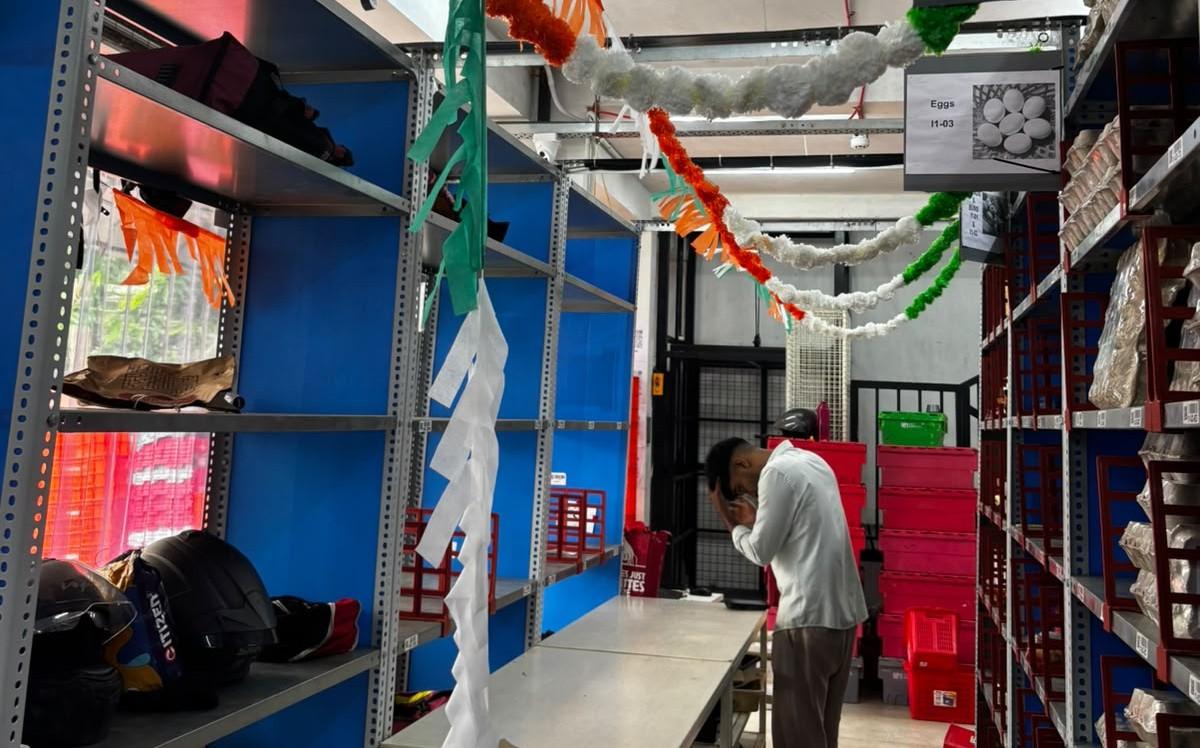
This is the gap Zippee is built for. Zippee runs dark stores across 21 cities and delivers 30 minute, 60 minute, and same-day fulfilment for D2C brands on the brand's own channel, not a marketplace. The capacity is dedicated and reserved, so the window you promise is a window you can keep during a peak, not just on a quiet Tuesday. Riders are full-time employees, which is what makes the service level consistent rather than variable. The customer stays yours. The data stays yours. The packaging standard stays a standard.
That turns fulfilment from a cost line into something the customer notices and comes back for.
The takeaway
The 10 minute number will keep making headlines. It is a real demand for a narrow set of missions and a distraction for most of the rest. For a D2C brand, the durable advantage is not being the fastest. It is being the one that keeps its word, on its own turf, on every order, at a cost that scales.
Zippee is not a delivery vendor you bolt on. It is the fulfilment infrastructure that lets the promise become the product.
If you are ready to turn your fulfilment into a competitive advantage, join our waitlist.


.png&w=256&q=75)
.png&w=256&q=75)


.png&w=256&q=75)


