Demand Forecasting for Quick Commerce: Right Units, Right Dark Store (2026)
A forecast can be almost perfectly accurate at the national level and still be wrong in every dark store that matters. That is the part of demand forecasting in quick commerce most D2C brands have not fully priced in.
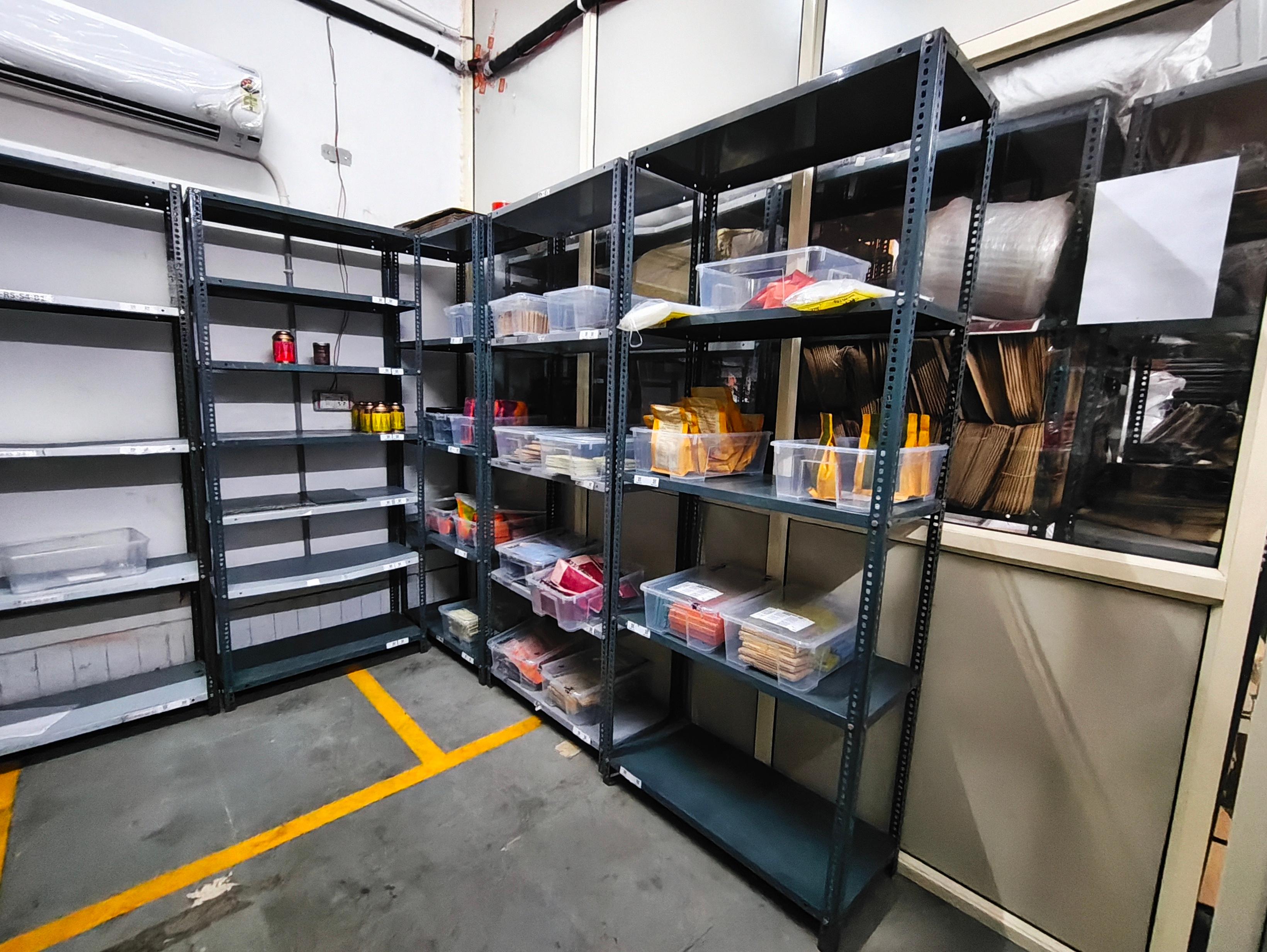
Under a centralized fulfilment model, a 10% forecast miss gets absorbed by a five to seven day replenishment cycle and a warehouse with room to hold the error. Inside a dark store carrying 500 to 800 active SKUs across a three to five kilometre radius, that same 10% miss shows up immediately: a stockout in one neighborhood and dead stock forty minutes away, for the same SKU, on the same day.
Brands scaling on quick commerce logistics in India are learning that demand forecasting is no longer a monthly planning exercise run in a spreadsheet. It is an operational input for D2C fulfillment that has to be right at the node level, refreshed on a cadence measured in days, and tied directly to how much working capital sits idle on a shelf versus how many orders get cancelled for lack of stock.
Why the National Forecast Number Was Never the Right Number
A national demand forecast tells a brand how many units of a SKU will sell across India next month. It says nothing about whether 60% of that demand lands in two pincodes in Bengaluru and 5% in a locality across town tomorrow morning. In quick commerce, where hyperlocal delivery windows leave no room for a fallback SKU transfer from another node, the second number is the one that decides revenue.2
The practical effect: a brand can forecast total demand within 2 to 3% of actuals at the national level and still post stockouts across a third of its serving dark stores, because the accuracy was averaged into existence rather than earned at the level customers actually experience. Zippee's own dark store network shows the size of this gap: nodes running node-level demand logic hold fill rates above 94%, against 82–88% for nodes still running a centralized safety stock formula pushed down without adjustment. These are directional figures from observed operational patterns across Zippee's network, not a guarantee for any specific brand. The mechanics of what happens once a forecast is generated, how a SKU actually gets assigned to a node, are covered in Zippee's inventory positioning breakdown. This piece is about the step before that: getting the number right before it ever reaches a node.
Quick Commerce Needs Three Forecasting Horizons, Not One
A single monthly demand plan cannot drive a business where replenishment decisions happen daily and a stockout costs a customer within hours, not weeks. Node-level forecasting works better split into three horizons, each answering a different operational question.
The 24 to 48 Hour Replenishment Forecast
This is the forecast that decides whether a specific dark store gets restocked tomorrow morning or the day after. It runs on the shortest and most volatile data: yesterday's orders, today's weather, and any known local trigger such as a cricket match, a festival, or a payday cluster. Brands with a same-day or 90-minute replenishment window from their mother warehouse can carry lower safety stock here than brands running a 24-hour cycle, because the forecast has less time to be wrong before it can be corrected.
The 7 to 14 Day Node Rebalancing Forecast
This horizon decides whether a SKU should move from zonal coverage, two to three nodes in a city, to core coverage across every active node, or the reverse. It smooths out the daily noise the 24 to 48 hour forecast reacts to and looks for a genuine shift in demand pattern rather than a one-off spike.
The 30 to 90 Day Category and Promotional Forecast
This is where seasonal builds, festival demand, and planned promotional pushes get shaped before they happen instead of reacted to afterward. A brand that treats a 90-day festival ramp with the same forecasting logic as a Tuesday afternoon will either under-stock the peak or carry the excess for months afterward.
A Framework for Choosing Your Forecasting Method
Not every SKU needs the same forecasting method, and running one method across an entire catalogue is a common way brands overspend on forecasting sophistication for slow movers while underspending on it for the SKUs that actually drive volume.
| Method | Data Required | Best For | Directional Accuracy Range | Main Limitation |
| Simple moving average | 4–8 weeks of order history | Stable, low-velocity SKUs | Wide error bands at node level | Lags sudden demand shifts; blind to seasonality |
| Weighted or exponential smoothing | 8–12 weeks, recency-weighted | Core SKUs with mild trend | Tighter than moving average on trending demand | Reactive; weak on step changes like launches or virality |
| Causal or regression (weather, day-of-week, local events) | 3–6 months plus external variables | Weather or occasion-sensitive categories | Improves accuracy for known demand drivers | Needs a clean external data feed and ongoing upkeep |
| ML-based demand sensing | 6+ months of granular pincode-level order data | High-SKU-count catalogues, fast-changing assortments | Highest node-level accuracy where data volume supports it | Needs data volume and infrastructure most single-brand teams do not run in-house |
Accuracy ranges are directional, drawn from industry reporting and Zippee's dark store network patterns, not a guaranteed outcome for any specific brand or category. Input needed: brand-specific forecast accuracy should be validated against your own SKU-level order history before being used to set inventory targets.
The Cold Start Problem: Forecasting a SKU With No Sales History
Every method above assumes order history exists. A new SKU launch, or an existing SKU entering a new city, has none. Treating a cold-start SKU with a 30-day forecast built on zero data is how brands end up either stranding capital on a shelf or stocking out in the first week that matters most for review velocity and repeat purchase.
The workable approach is to forecast from a proxy cohort: SKUs in the same category, at a similar price point, with a comparable early-adopter profile, then apply a conservative initial buffer with a short review cycle, seven days rather than thirty, so the forecast gets corrected against real signal quickly instead of running on an assumption for a month. Replenishment latency from the mother warehouse should shrink that buffer further; a node two hours from resupply can run leaner than one a day away.
Measuring Forecast Accuracy the Way Quick Commerce Actually Needs
Most D2C teams still measure forecast accuracy with a single blended MAPE number at the SKU or national level. That number can look healthy while hiding a real forecasting problem, because errors that run too high in one node and too low in another cancel out in the average.
Two adjustments matter more in a quick commerce context. First, measure weighted MAPE at the node level, not the blended national level, since node-level accuracy is what determines whether a specific dark store's shelf matches actual demand. Second, track forecast bias separately from forecast error: whether the model is systematically over-forecasting or under-forecasting, not just how far off it runs on average, because a biased forecast compounds the same mistake every cycle instead of averaging it out.
This is not an academic distinction. Forecast error that shows up as stockouts erodes fill rate, one of the fulfilment KPIs D2C ops leads should be tracking as a leading indicator of RTO reduction and repeat purchase, alongside Perfect Order Rate and OTIF, covered in more depth in Zippee's fulfilment KPI breakdown. Consistent on-shelf availability is also one of the more direct levers a brand has to improve NPS and last-mile delivery satisfaction, because most negative delivery feedback traces back to a substitution, a delay, or a cancellation rather than the delivery window itself.
How Zippee Turns a Forecast Into Stock That Is Actually There
Zippee is not a forecasting SaaS bolted onto someone else's delivery network. The pincode-level order density, node-level replenishment latency, and basket co-occurrence data a working forecast needs are a byproduct of running hyperlocal fulfillment infrastructure across 21 cities, including Delhi NCR, Mumbai, Bengaluru, and Hyderabad, not a separate analytics product a brand has to stitch together after the fact.
For brands like HealthKart, Epigamia, Supertails, and Clinikally, that means the forecast and the execution sit on the same infrastructure layer instead of two disconnected systems reconciled manually every week. A forecast that cannot be executed at the node level the same day it is generated is not a forecast. It is a spreadsheet.
The Real Advantage Is the Loop, Not the Model
The brands that win on quick commerce logistics in India over the next few years will not be the ones with the most sophisticated forecasting model. They will be the ones whose forecast, replenishment, and dark store execution sit close enough together that a demand signal from yesterday changes what is on the shelf tomorrow, not next month.
Zippee is built as that infrastructure layer, not a delivery vendor sitting downstream of a brand's planning decisions. If you're ready to turn your fulfillment into a competitive advantage, join our waitlist.


.png&w=256&q=75)
.png&w=256&q=75)


.png&w=256&q=75)


