30-Minute Delivery - Not just for Groceries Anymore
Most D2C founders still think of quick commerce as Blinkit's problem to solve, not theirs. That assumption is costing them customers.
The brands winning in 2026 are not just the ones with the best product or the sharpest CAC. They are the ones who figured out that delivery speed is no longer a logistics spec, it is a conversion lever. And the categories feeling this shift hardest are not instant noodles or shampoo. They are dermatology serums, prescription-adjacent supplements, and pet medication.
Here is what changed, why it matters to you, and what you should actually do about it.
How Consumer Expectations Outgrew the Grocery-First Quick Commerce Model
When Blinkit, Zepto, and Swiggy Instamart started scaling dark store networks in 2021 and 2022, the assortment was predictable: groceries, household essentials, personal care basics. The consumer trained on that experience quickly.
By 2025, Blinkit reported that non-grocery categories (electronics, beauty, pharma OTC, pet care) accounted for over 40% of order volume. That number was under 20% two years earlier. The consumer did not change what they want. They changed what they expect.
When someone can get a face wash delivered in 18 minutes, they start asking why their Rs. 2,400 retinol serum takes three days. When their dog's joint supplement arrives at 11pm via Swiggy Instamart, they start questioning why their premium pet nutrition brand still runs on a 48-hour dispatch promise.
The expectation is category-agnostic now. The infrastructure is not. That gap is where D2C brands are either winning or bleeding.
The Three D2C Categories Where Delivery Speed Drives Revenue
1) Beauty and Skincare: High Repeat Rates, High Churn Risk
The skincare consumer in India is increasingly clinical. Brands like Minimalist, Dot & Key, and Clinikally have trained buyers to research ingredients, follow routines, and make considered purchases. But considered does not mean patient. When a buyer runs out of their SPF moisturizer on a Tuesday morning, they want it in 30 minutes, not Thursday.
The repeat purchase rate in skincare is high, but so is the churn risk when fulfillment fails. A directional estimate based on D2C cohort data we have seen across our brand partners: customers who receive their first order in under 2 hours have 30-40% higher 90-day LTV than those on standard 2-3 day delivery. The mechanism is simple: speed signals reliability, and reliability drives subscription conversion.
2) Pharma and Wellness: Urgency-Driven Purchases Reward the Fastest Fulfiller
OTC and prescription-adjacent products (nutraceuticals, diagnostics, sleep supplements, dermatology Rx) are not impulse purchases, but they are urgent ones. When someone needs a UTI relief tablet at 9pm, or their child's fever medication runs out at midnight, the brand that can fulfill in 30-60 minutes does not just win the order. It wins the relationship.
Apollo Pharmacy, PharmEasy, and 1mg have all accelerated their hyperlocal fulfillment ambitions for exactly this reason. The D2C wellness brands that do not build equivalent infrastructure will get disintermediated by aggregators who do.
3) Pet Care: Where Fulfillment Speed Becomes a Retention Moat
Pet care in India is the fastest-growing D2C vertical that most VCs are still underweighting. Supertails, Heads Up for Tails, and Wiggles are building serious brands with high retention- but pet ownership creates genuinely urgent fulfillment scenarios. A pet parent whose dog has an allergic reaction at 8pm, or who just ran out of prescription diet food, is not browsing for options. They are buying from whoever can deliver fastest.
This is a category where quick commerce logistics infrastructure is not a nice-to-have. It is a retention moat.
The Metrics That Actually Predict Revenue Impact From Faster Delivery
Most brand operators track delivery SLA in aggregate. That is the wrong denominator. The metric that actually predicts revenue impact is speed-to-conversion by purchase urgency segment.
| Metric | Standard (2-6 days) | SDD (2-9 hrs) | Qcomm (30-120 mins) |
| Add-to-cart to order conversion | Baseline | + 8-12% | + 18-25% |
| First-order repeat rate | Baseline | + 15% | + 28-35% |
| Subscription opt-in rate | Baseline | + 10% | + 22% |
| RTO rate (Return to Origin) | 18-38% | 6-14% | 2-6% |
| Delivery-related support tickets | High | Medium | Low |
Note: Conversion and repeat rate figures are directional benchmarks from Zippee brand partner data and public D2C performance research. RTO figures are consistent with Shiprocket and Delhivery 2024-25 data.
RTO reduction alone justifies the infrastructure investment for most brands. At a 20% RTO rate on a Rs. 1,000 AOV, every 100 orders costs you Rs. 20,000 in reverse logistics, restocking, and cash flow drag. Drop that to 5% via hyperlocal dark store fulfillment, and you have effectively funded your quick commerce logistics upgrade from savings alone.
We wrote more about how brands are calculating the true cost of RTO in our piece on D2C fulfillment economics. Worth reading before you model this for your own P&L.
Why Standard 3PL Infrastructure Cannot Deliver Quick Commerce Speed
Standard 3PL fulfillment is built for predictability at scale, not speed at proximity. A fulfillment center in Bhiwandi serving Mumbai, or one in Kundli serving Delhi NCR, cannot do 30-minute delivery. The physics do not work.
What does work: a network of smaller dark stores, positioned within 3-5 km of high-density consumer clusters, with real-time inventory allocation and last-mile routing optimized for speed.
The challenge for most D2C brands is that building this themselves is capital-intensive and operationally complex. You are looking at 8-12 dark store locations per metro to get meaningful coverage, lease and fitout costs of Rs. 3-8 lakh per location, and a warehouse management system that can handle micro-fulfillment inventory logic. For a brand doing Rs. 20-50 crore in revenue, that is not a rational build.
The alternative- selling into Blinkit or Zepto directly, comes with its own constraints: margin compression, limited brand control, and no access to your own customer data. You are renting someone else's logistics infrastructure and their customer relationship.
This is exactly the problem that quick commerce-as-a-service was built to solve: giving D2C brands the speed of a Blinkit without the trade-offs of selling through one. See how the dark store model works for D2C brands.
How Winning D2C Brands Are Building Hyperlocal Fulfillment as a Channel in 2026
The brands that have figured this out are treating hyperlocal delivery fulfillment as a channel, not just a logistics upgrade. Specifically:
Segmenting SKUs by Urgency and Geography Across Dark Store Networks
Not every SKU needs to be in every dark store. High-velocity, high-urgency SKUs go into the quick commerce network. Long-tail catalog stays in the central warehouse for standard delivery.
Using Same-Day Delivery as a Paid Acquisition and Conversion Message
'Order before 6pm, delivered today' is a conversion message that paid channels cannot replicate. It is showing up in performance marketing creative, on PDPs, and in cart abandonment flows.
Redesigning Packaging for Last-Mile Speed and Damage Reduction
Quick commerce fulfillment requires packaging that survives short but fast last-mile runs. Brands that re-engineered their pack sizes for the dark store environment report 15-20% fewer damaged delivery complaints.
Measuring NPS and LTV by Delivery Speed Cohort
The brands doing this have found that the NPS delta between a 4-hour and a 30-minute delivery is larger than between a 30-minute and a 24-hour delivery. Speed has diminishing returns, but the floor for 'acceptable' keeps rising.
How D2C Brands Can Access Quick Commerce Infrastructure Without Selling Through Aggregators
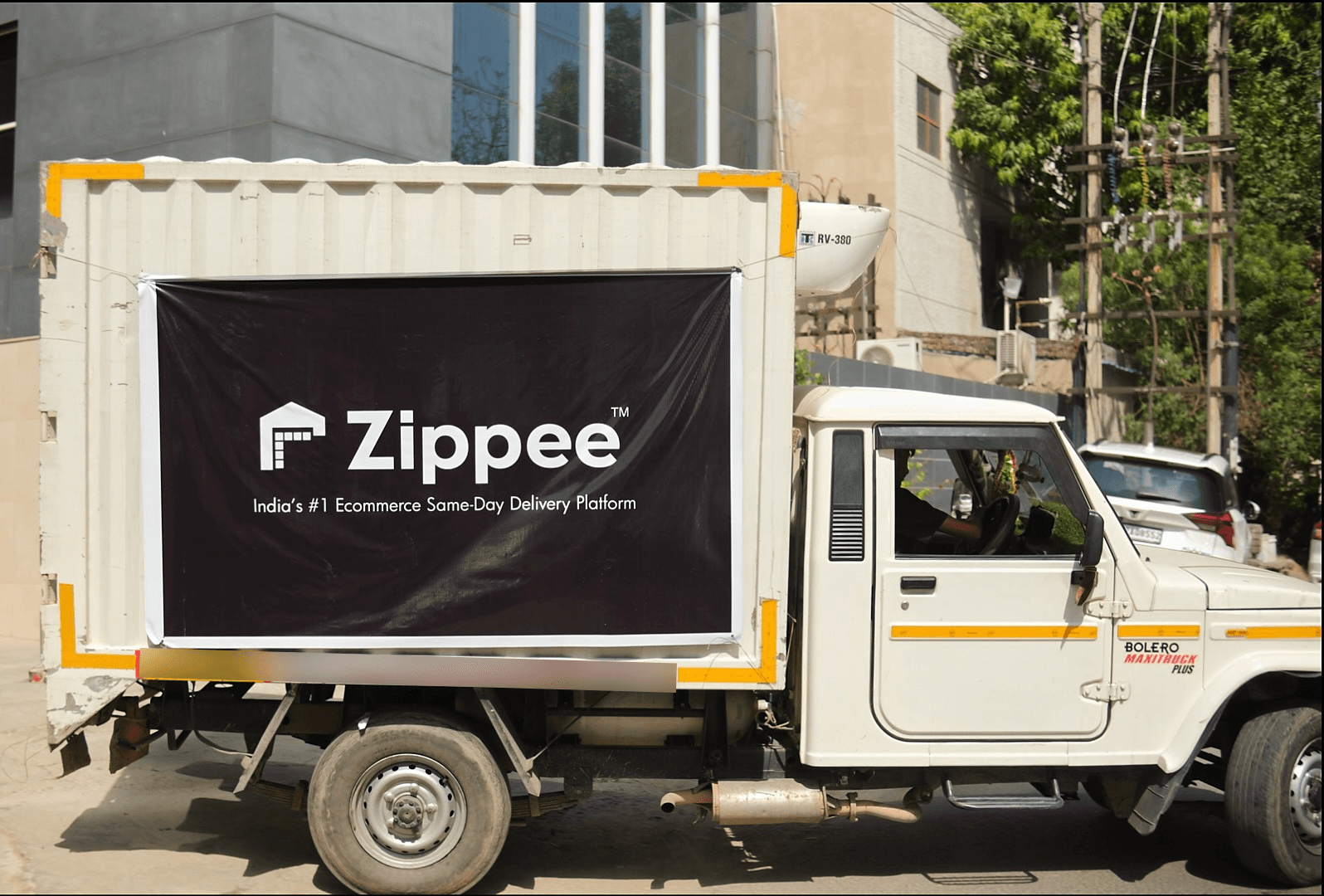
Zippee is not a courier. It is not a marketplace. It is the infrastructure layer that lets D2C brands operate quick commerce delivery without building it themselves.
Across 21 cities- Delhi NCR, Mumbai, Bengaluru, Hyderabad, and expanding, Zippee runs the dark store network, the WMS, the last-mile routing, and the brand-facing dashboard that gives you visibility into every order. Brands like HealthKart, Epigamia, Supertails, and Clinikally ( An 81% drop in RTOs) use Zippee because they want the speed of quick commerce with the brand ownership and data access of a direct channel.
The way we think about it: your fulfillment should be a competitive advantage, not a commodity cost. In 2026, the brands that have invested in same-day and 30-minute delivery infrastructure are not just winning on NPS. They are compounding on LTV while their competitors are still debugging their 3PL SLA breach reports.
The window to build this moat is not closing yet, but it is narrowing.
Conclusion
Quick commerce was always going to escape FMCG. The only question was when the consumer expectation would migrate to adjacent categories. In beauty, pharma, and pet care, that migration is already underway.
The brands that treat hyperlocal delivery as infrastructure, not a one-off experiment, will look back at 2026 as the year they got ahead of it. The ones that wait will spend the next three years trying to close an LTV gap that compounded while they hesitated.
Zippee exists to be that infrastructure. Not a vendor you switch when pricing moves. A platform you build on.
Want to turn your fulfillment into a competitive advantage? Sign up for our waitlist, and let's reach your customers faster, together.


.png&w=256&q=75)
.png&w=256&q=75)


.png&w=256&q=75)


