Green Logistics Compliance - D2C Carbon Accounting Guide 2026
The brands most exposed to India's incoming green logistics regulations are not the ones burning diesel trucks across 500-km inter-city lanes. They are the quick commerce players doing 30-minute last-mile delivery in dense urban corridors, where every idle vehicle, inefficient route, and underutilized dark store is quietly piling up Scope 3 emissions on someone's balance sheet.
Carbon accounting is not a future problem. For D2C brands selling through platforms like Myntra, Blinkit, or their own D2C storefronts, the regulatory groundwork is already being laid. The Bureau of Energy Efficiency (BEE) under India's Carbon Credit Trading Scheme (CCTS) formally launched in 2023. ESG-linked covenants are now standard in PE and VC term sheets for consumer companies. And SEBI's Business Responsibility and Sustainability Reporting (BRSR) Core framework, mandated for the top 1,000 listed companies from FY2023-24, will cascade into supply chains within the next 12-18 months.
If you are a D2C founder or supply chain head reading this, your logistics partner's carbon profile is about to become your problem.
Why Last-Mile Delivery Is the Most Exposed Part of Your Carbon Footprint
The RTO Problem: Double the Emissions, Zero the Revenue
Logistics contributes roughly 8% of global CO2 emissions, and last-mile delivery alone accounts for an estimated 25-30% of that total (McKinsey, 2023, directional). In India, urban last-mile is structurally more complex: road congestion in Delhi NCR or Bengaluru means vehicles idle more, routes are less predictable, and failed deliveries (RTOs) create double the emissions per order.
Why Urban Congestion Makes Indian Last-Mile Structurally Harder to Decarbonize
RTO rates for Indian D2C brands typically sit between 15-35% depending on category and geography (industry benchmarks; figures vary by brand). Every returned order is not just a revenue loss. It is a second vehicle movement, double the packaging waste, and a carbon liability with no corresponding revenue. Reducing RTO rates is therefore one of the highest-leverage green logistics interventions available, and it is underrated precisely because most brands still think of it as a cash flow issue, not a compliance one.
We have written about this in detail in our piece on how hyperlocal fulfillment reduces RTO risk for D2C brands. The short version: proximity to the customer is the most reliable RTO-reduction tool available, because same-day and 30-minute delivery windows create higher buyer intent and lower cancellation rates.
The Green Logistics Compliance Landscape in India: What's Binding Now vs. What's Coming
There is a lot of noise about 'green mandates' that conflates aspirational policy with enforceable obligations. Here is what is actually binding or near-binding in the Indian context:
| Framework | Applicability | What it requires | Timeline & urgency |
| BRSR Core (SEBI) | Top 1,000 listed companies; cascades to supply chain vendors | Scope 1, 2, 3 emissions disclosure; supply chain sustainability metrics | Active now |
| CCTS (BEE) | Energy-intensive sectors; expanding scope post-2025 | Carbon credits, audit trails, verified emission records | 2025-2026 |
| EPR for E-commerce Packaging | Brands selling online above threshold volume | Packaging weight per order, recyclability certificates | Active; enforcement tightening |
| EV Fleet Norms (MoRTH) | Last-mile delivery operators in cities above 1M population | % EV fleet targets for delivery partners by 2025-27 | 2025-2027 |
| Investor ESG Covenants | VC/PE-backed consumer brands (Series A and above) | Annual sustainability reports; logistics carbon footprint disclosures | Voluntary but standard |
Sources: SEBI BRSR Core circular, BEE CCTS notification 2023, MoRTH EV policy framework. Timeline assessments are directional.
The cascade effect is the critical point here. A Myntra or a HealthKart, once subject to BRSR Core disclosure, will require their logistics and fulfillment partners to furnish emissions data. That demand passes downstream to every brand on their platform. If you are doing D2C fulfillment through a third-party logistics partner that cannot produce a Scope 3 emissions report, you will have a gap in your compliance chain.
The Dark Store Model as a Carbon Reduction Architecture — Not Just a Speed Play
Centralized Warehouse vs. Hyperlocal Dark Store: The Emissions Math
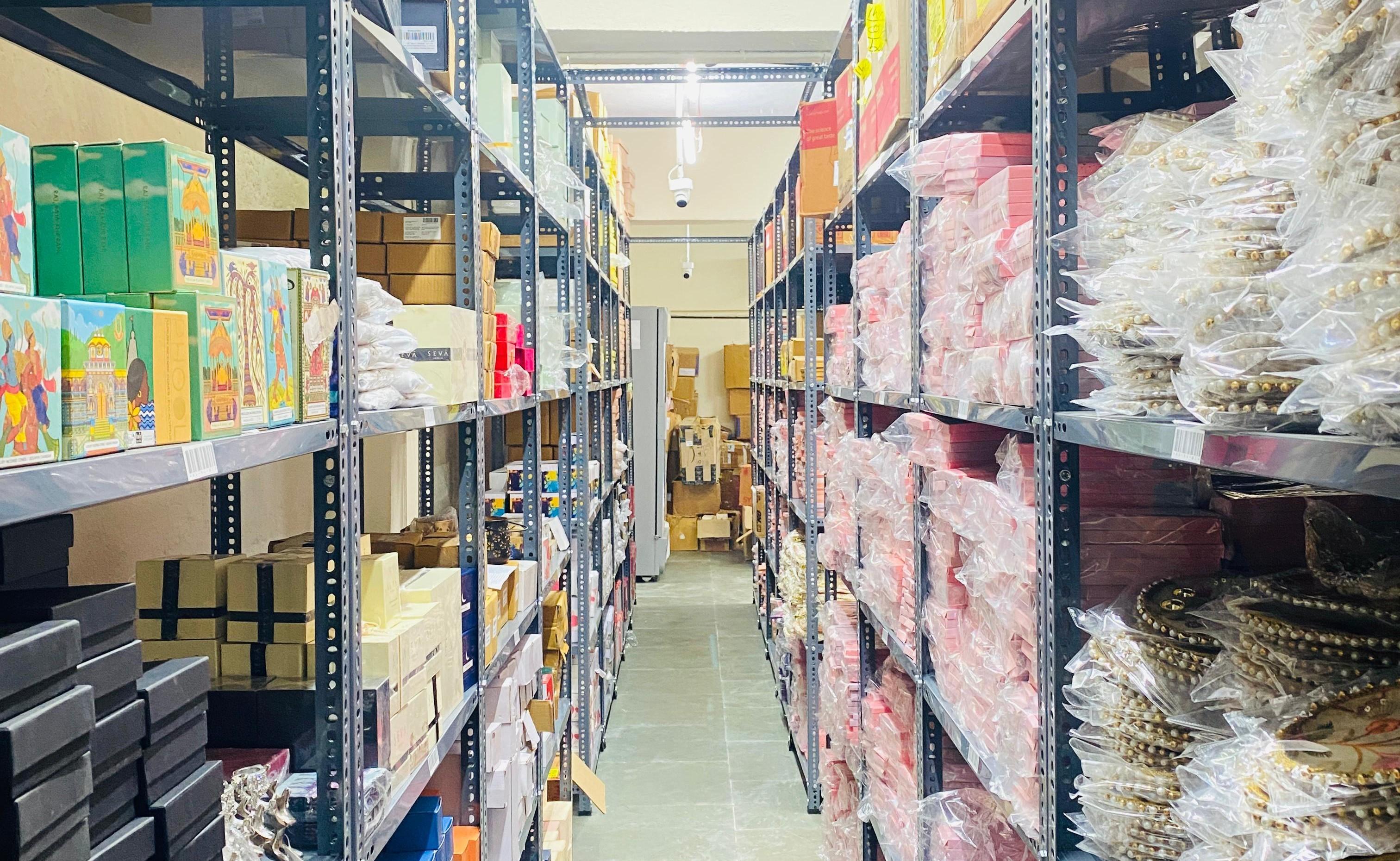
The structural shift toward dark store-based hyperlocal fulfillment is not just a speed play. It is inherently a lower-emissions architecture, and forward-looking brands should be articulating it as such.
Here is the logic: a centralized warehouse in Bhiwandi serving all of Mumbai generates 35-50 km of last-mile travel per order on average (directional, based on typical hub-to-customer distances). A dark store network with nodes in Andheri, Bandra, and Navi Mumbai cuts that to under 5 km per order in covered zones. That is a 7-10x reduction in last-mile vehicle kilometers, before you even account for EV fleet deployment, route optimization, or delivery density improvements.
Why Proximity to the Customer Is Your Highest-Leverage Scope 3 Lever
Key metric for your green logistics case- Average last-mile distance per order from a centralized warehouse: 35-50 km. From a dark store network in-city: 3-6 km. Every order fulfilled hyperlocally is a data point in your Scope 3 reduction story.
For brands already working with Zippee's dark store network across cities like Delhi NCR, Mumbai, Bengaluru, and Hyderabad, this infrastructure advantage is built in. The question is whether your team is capturing and reporting it.
Three Operational Steps to Build a Green Logistics Baseline for Your Brand
Most founders interpret 'prepare for compliance' as 'hire a consultant and file a report.' That is the wrong frame. Compliance preparation for green logistics is an operational redesign question, and it has three distinct components:
Step 1 - Measure: Building Your Last-Mile Emissions Baseline
You cannot reduce what you have not measured. Start by requesting a last-mile emissions report from your current fulfillment partner. If they cannot produce one, that is important information. At minimum, you want: vehicle-km per order, EV fleet percentage, packaging weight per shipment, and RTO rate by city. These four numbers let you build a rough Scope 3 baseline.
Step 2 - Redesign: Auditing Your Fulfillment Network Architecture
Consolidation into fewer, larger warehouses was a cost play that no longer holds under carbon accounting logic. Distributed dark store networks, while operationally complex to manage independently, reduce per-order emissions materially. If you are evaluating same-day delivery infrastructure, ask the provider for their emissions per order data, not just their SLA metrics.
Step 3 - Report: Creating Auditable, Order-Level Emissions Data
ESG disclosures require auditable data, not estimates. Ensure your 3PL or D2C fulfillment partner can produce order-level emissions data, not just fleet-level averages. This becomes the foundation of any BRSR or investor reporting. We covered the data layer requirements for D2C supply chains in more depth in our resource on fulfillment analytics for growing brands.
What to Look for in a Fulfillment Partner Under Carbon Compliance Pressure
Zippee is not a delivery vendor. We are fulfillment infrastructure: 21 cities, a growing network of dark stores, and operations built around hyperlocal delivery for D2C brands and marketplaces including HealthKart, Epigamia, Supertails, Clinikally, and Myntra.
The reason that distinction matters in a carbon compliance context is simple. Infrastructure providers can offer what courier aggregators cannot: structural emissions reduction through network design, not just efficiency improvements at the margin. A dark store in Koramangala serving quick commerce delivery for a health and wellness brand is delivering 30-minute windows at 4 km per order. That is not a fuel efficiency claim. That is an architecture claim.
We are building toward order-level emissions reporting as a native output of our fulfillment platform, because we believe it will move from a differentiator to a baseline expectation within 18-24 months. Brands that partner with infrastructure providers who share that view will have a cleaner compliance path than those who bolt on a carbon accounting tool to a logistics stack that was never designed with this in mind.
The Bottom Line
Green logistics compliance in India is not a 2030 problem. The regulatory scaffolding is in place, investor expectations are shifting, and the supply chain cascade from listed anchor brands will reach your fulfillment contracts faster than most founders expect. The brands that will navigate this most smoothly are the ones who treat it as an infrastructure decision now, not a reporting exercise later.
Hyperlocal fulfillment through a distributed dark store network is one of the few places where doing the right thing for the customer (faster delivery) and doing the right thing for compliance (lower per-order emissions) converge naturally. That alignment is worth building around.
Turn your fulfilment into a competitive advantage. Join our waitlist.


.png&w=256&q=75)
.png&w=256&q=75)


.png&w=256&q=75)


